A desert oasis at the far west of the Hexi Corridor, with Buddhist cave art, tall dunes and Silk Road ruins.
A desert oasis at the far west of the Hexi Corridor, with Buddhist cave art, tall dunes and Silk Road ruins.
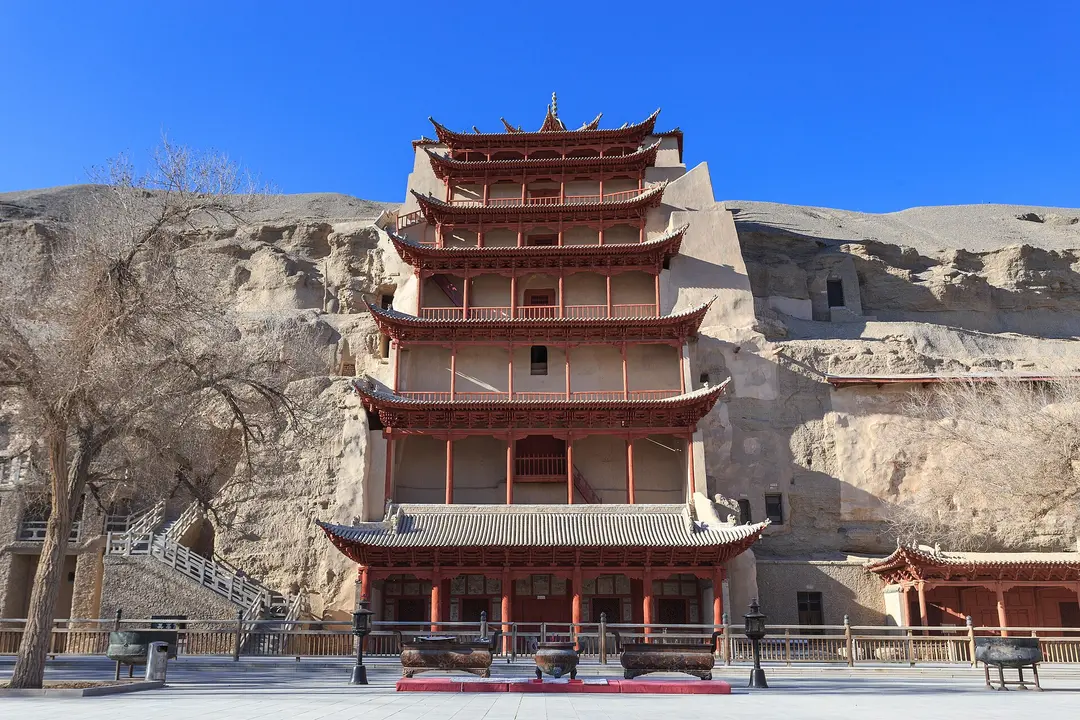
Buddhist cave temples cut into a cliff southeast of the oasis between the 4th and 14th centuries; 492 caves survive, and the site has been on the UNESCO World Heritage List since 1987. Every visit starts at the Mogao Digital Exhibition Center, not at the caves: the regular visit shows the digital films there and then eight caves with a guide.
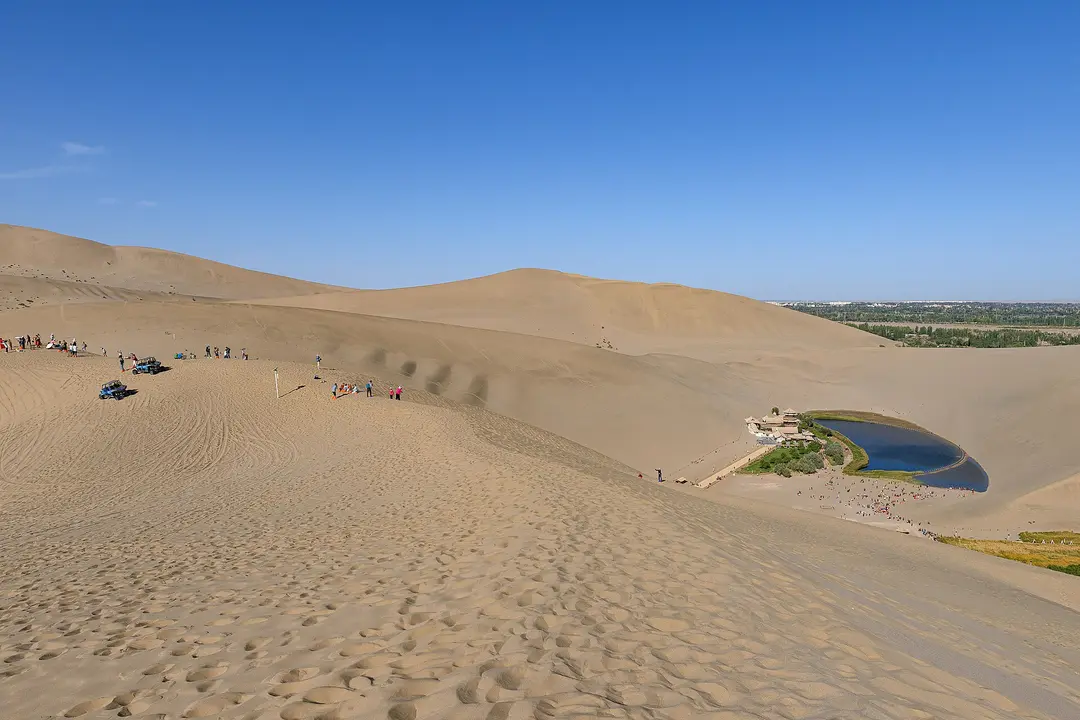
High dunes about 5 km south of town around a small crescent-shaped spring-fed lake, with camel rides and sand sliding. Full-price entry is ¥110, booked online in advance with real-name details; go in the late afternoon for softer light and cooler sand.
Also called Shazhou Night Market, on Yangguan Road in the centre: free to enter, with Tang-style streets, about 100 craft stalls and the Dunhuang Foods hall of 63 food stalls. Busiest after dark; try the apricot-peel drink (杏皮水) here.
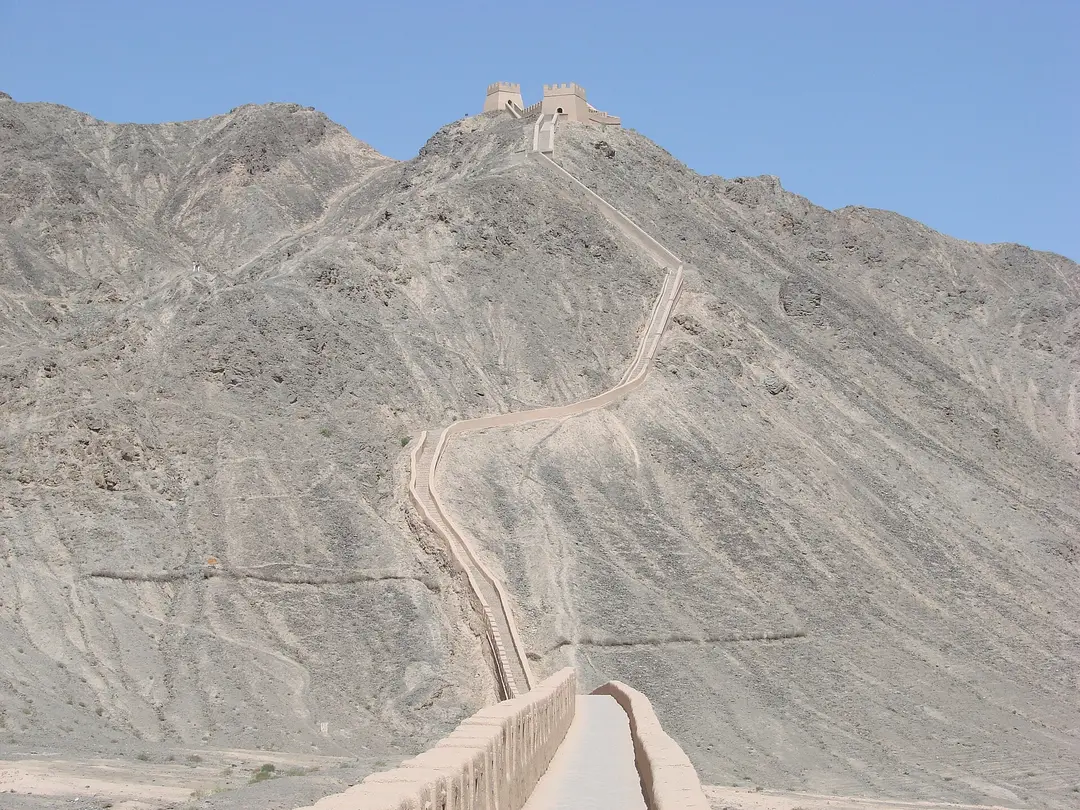
The ruins of the Han dynasty Jade Gate, about 90 km northwest of town on the G215: the square earth fort of Xiaofangpan, sections of the Han Great Wall and the Hecang granary ruins, linked by the site's sightseeing buses.
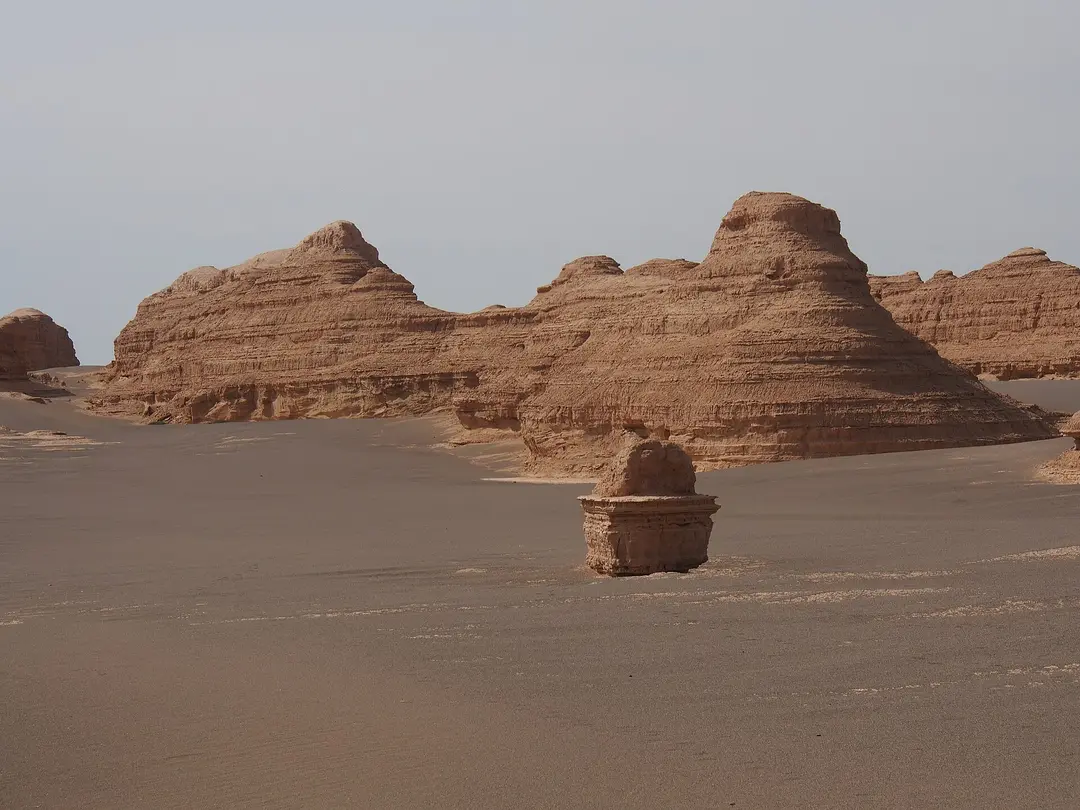
Wind-carved clay ridges rising from the Gobi near the Xinjiang border, about 158 km and 2½ hours by road from town, usually combined with Yumen Pass in one day. You tour by park shuttle on a set route of about 2–2½ hours.
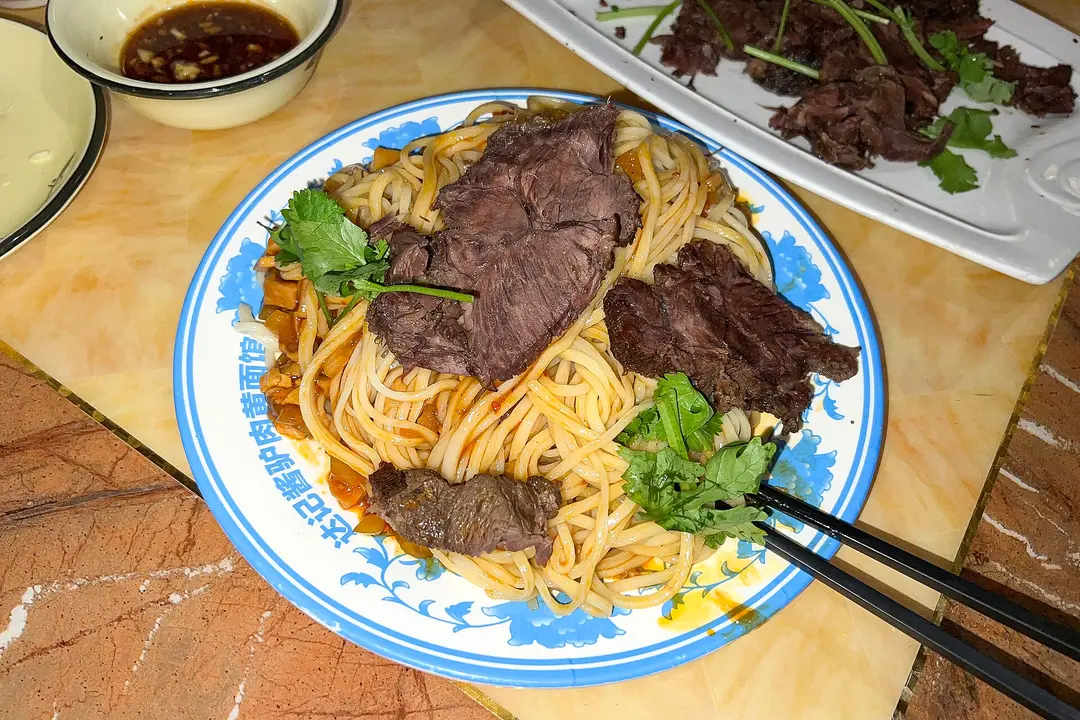
Springy yellow wheat noodles under slices of braised donkey meat, a Dunhuang staple sold across town and at the night market.
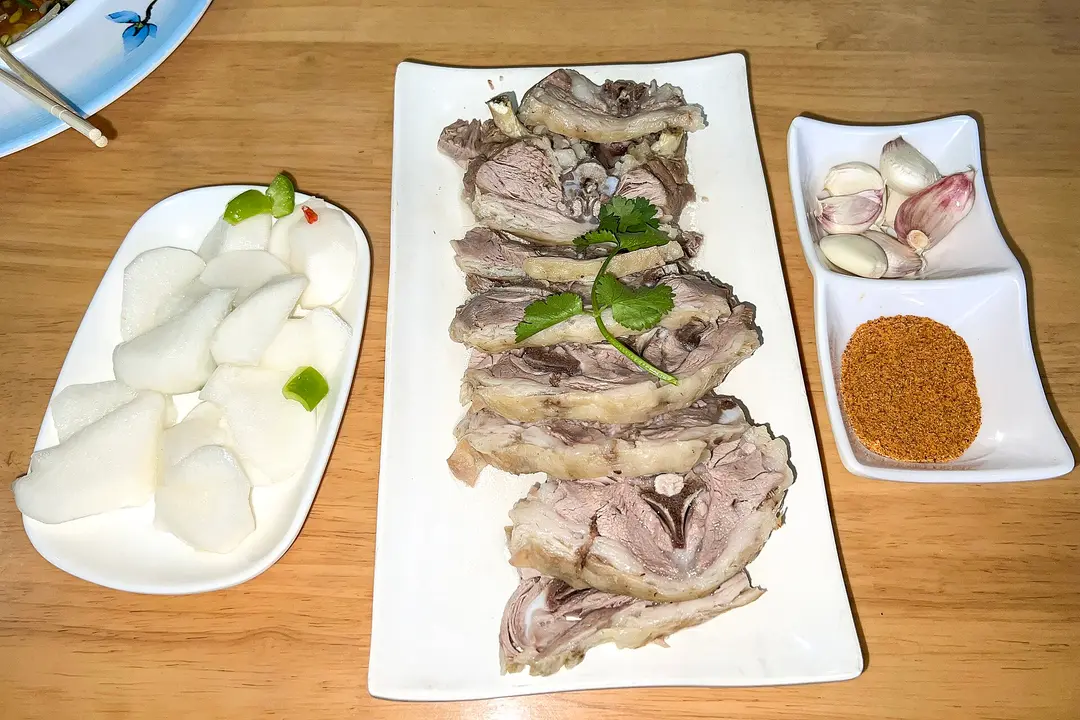
Lamb boiled on the bone and eaten with your hands, seasoned with salt and pepper, a signature dish of Dunhuang.
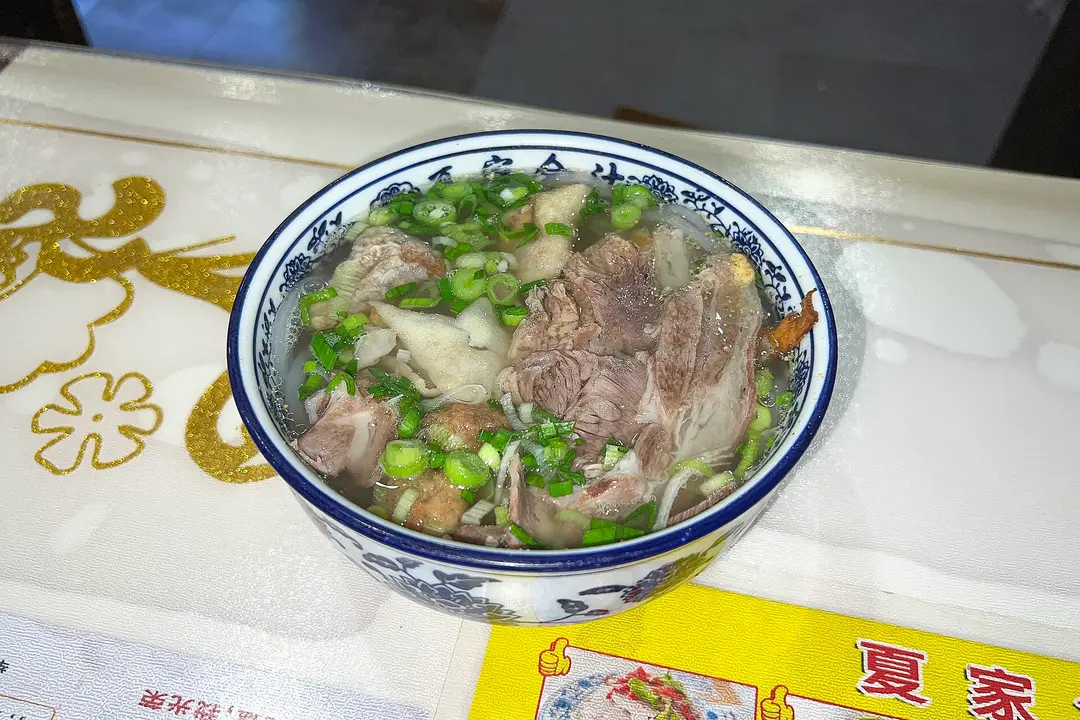
A lamb broth simmered with sliced lamb, vermicelli, tofu and other additions, a local favorite at small soup shops.
Dunhuang is an oasis town at the far western end of the Hexi Corridor in Gansu, where the old Silk Road routes left China proper for the deserts to the west. Two passes, Yumen and Yangguan, guarded the way, and for a thousand years monks and patrons filled the cliff caves at Mogao with Buddhist painting and sculpture. That art is the reason to come; the dunes and the wind-carved desert are the bonus.
It suits visitors with a real interest in art and history who do not mind distance. Dunhuang is a long way from the main cities, so it fits best at the end of a Silk Road trip from Xi’an, flying one way and taking the train the other, or as a short flight from Xi’an on its own.
Book your Mogao slot first and plan around it. On day one, spend the morning at Mogao, rest through the midday heat, then go out to Mingsha Shan and Crescent Lake in the late afternoon and stay for sunset. Eat at the night market afterwards.
On day two, leave early with a driver for Yumen Pass and the Yadan geopark, about 2½ hours out, and get back by evening. A third day gives slack for a sold-out Mogao date or a sandstorm. Plan the trains with our high-speed train guide, set up phone payment with paying in China, and check the entry rules for your passport in visa-free entry.
Checked on 29 October 2026. Opening times and ticket rules change; confirm on the official site before you go.
Two to three days: half a day at the Mogao Caves, an afternoon at Mingsha Shan and Crescent Lake, and a long day for Yumen Pass and the Yadan geopark. A third day gives slack for a sold-out Mogao date or a sandstorm.
Book only on the official WeChat service account 莫高窟参观预约网, using your passport; tickets are real-name and timed, and the Dunhuang Academy has authorized no resellers. Summer and holiday dates go fast, so book as soon as your dates are fixed.
The regular visit (¥238 in peak season) includes the digital films and eight caves with a guide. On busy peak days the Dunhuang Academy also sells emergency tickets (¥100), which cover four caves and no films.
May to June and September to October are the best times to visit Dunhuang. July and August bring highs around 35°C and the biggest crowds, and winters are cold, with January nights around −15°C, but quiet and discounted.
A direct flight from Xi'an to Dunhuang takes about 2 hours 45 minutes, and the direct D train from Xi'an North takes about 11 hours. Many visitors fly one way and take the train the other.
Yes, for travelers with a real interest in art and history who do not mind distance. The Mogao Caves hold Buddhist painting and sculpture made between the 4th and 14th centuries, and the dunes and the wind-carved Yadan desert are the bonus.
Yadan National Geopark is about 158 km and 2½ hours by road from Dunhuang, and is usually combined with Yumen Pass, about 90 km out, in one day. There is no fuel on the desert road, so most visitors hire a car with a driver or join a small group.
A host who lives in Dunhuang can take care of as much or as little as you like. Pick what you need; it all comes back as one plan and one price.
Tell us your dates and which cities you have in mind. A host replies within 24 hours with a day-by-day plan that fits Dunhuang in, and a price.
Plan your trip