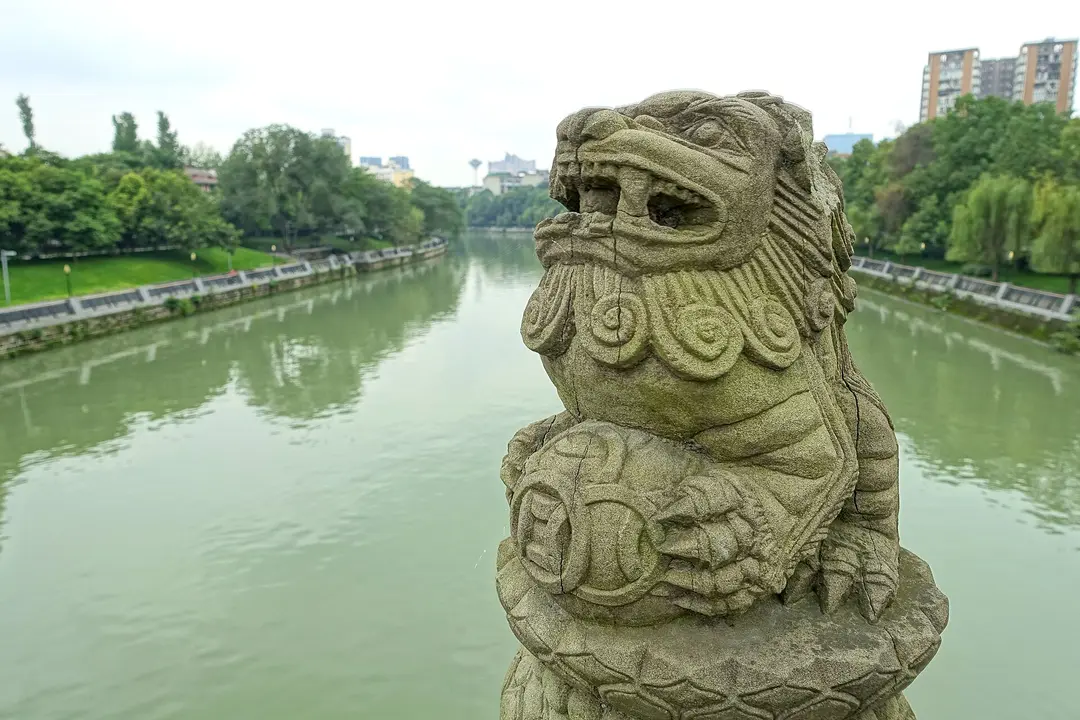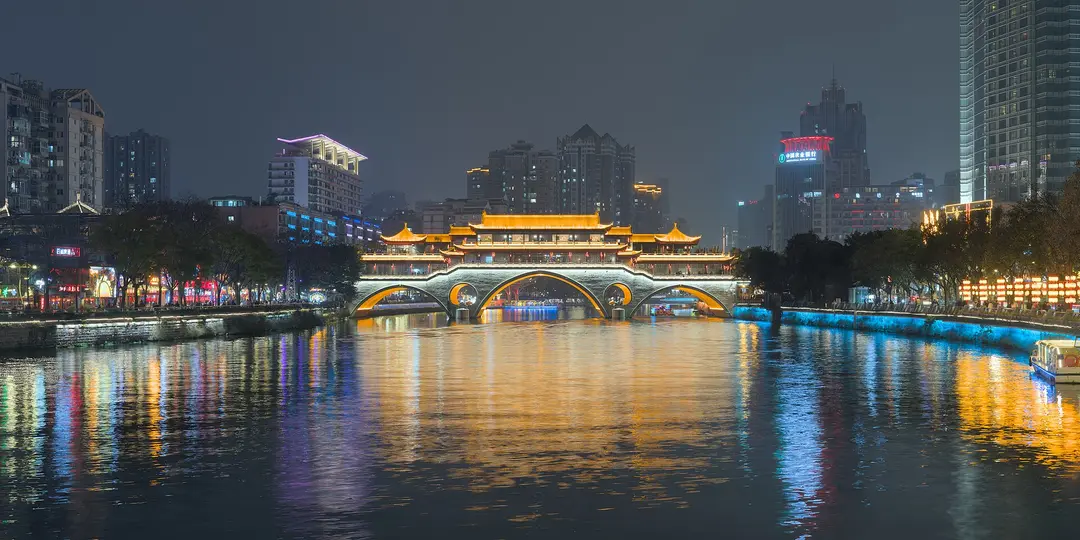
The city in brief
Chengdu is the capital of Sichuan province, in China’s southwest. Most visitors come for two things: giant pandas and Sichuan food. Both live up to the trip, and the city around them is easy to like.
The center is flat and compact enough to cover by metro. Chengdu has a reputation for a slow pace, and you see it in the parks, where people spend whole afternoons over a single cup of tea, cards and conversation. Plan your days around that rhythm: an early start for the pandas, then a long, unhurried afternoon.
When to go
Spring (March to June) and autumn (September to November) are the most comfortable seasons. Average temperatures sit around 12–24°C, and rain is moderate.
July and August average about 25°C with high humidity, and they are the wettest months of the year. Winter averages around 5–8°C. It rarely snows, but the damp, overcast air feels colder than the number suggests. Chengdu is often cloudy in every season, so bring a light layer rather than relying on sun.
Avoid the national holidays if you can, especially the first week of October and the Spring Festival. The Panda Base sells out and Kuanzhai Alley gets very crowded.
Three days in Chengdu
Day one: pandas and tea
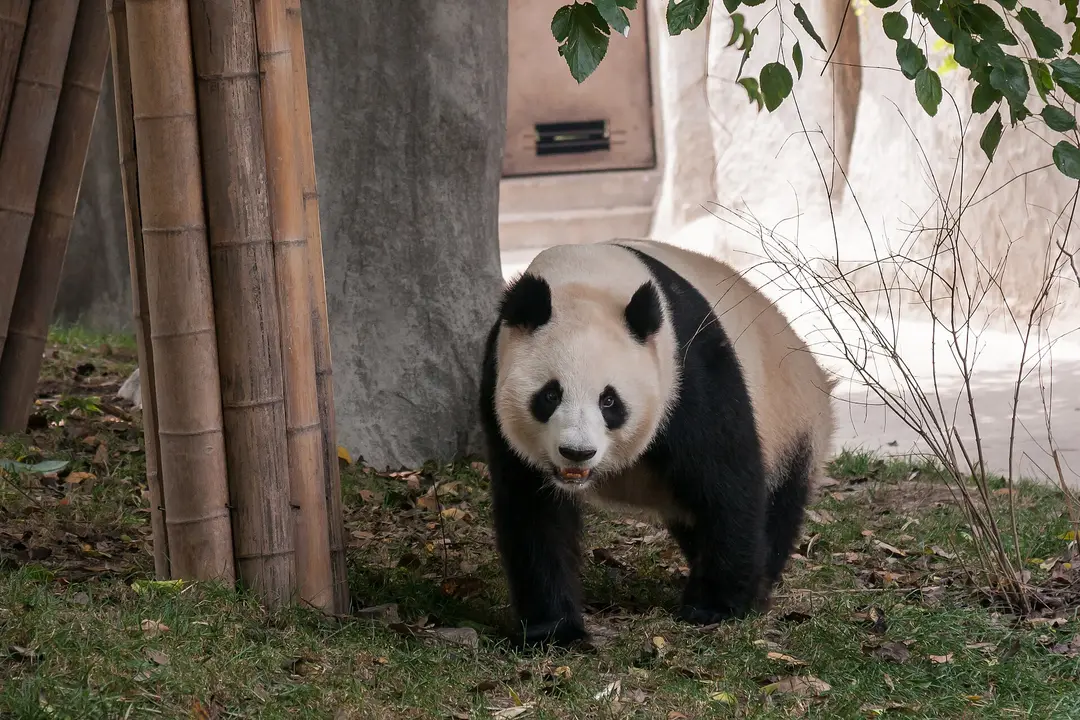
Start at the Chengdu Panda Base as close to opening as you can manage. The pandas are most active in the cool of the morning, and you need a morning-session ticket booked in advance. Allow about three to four hours.
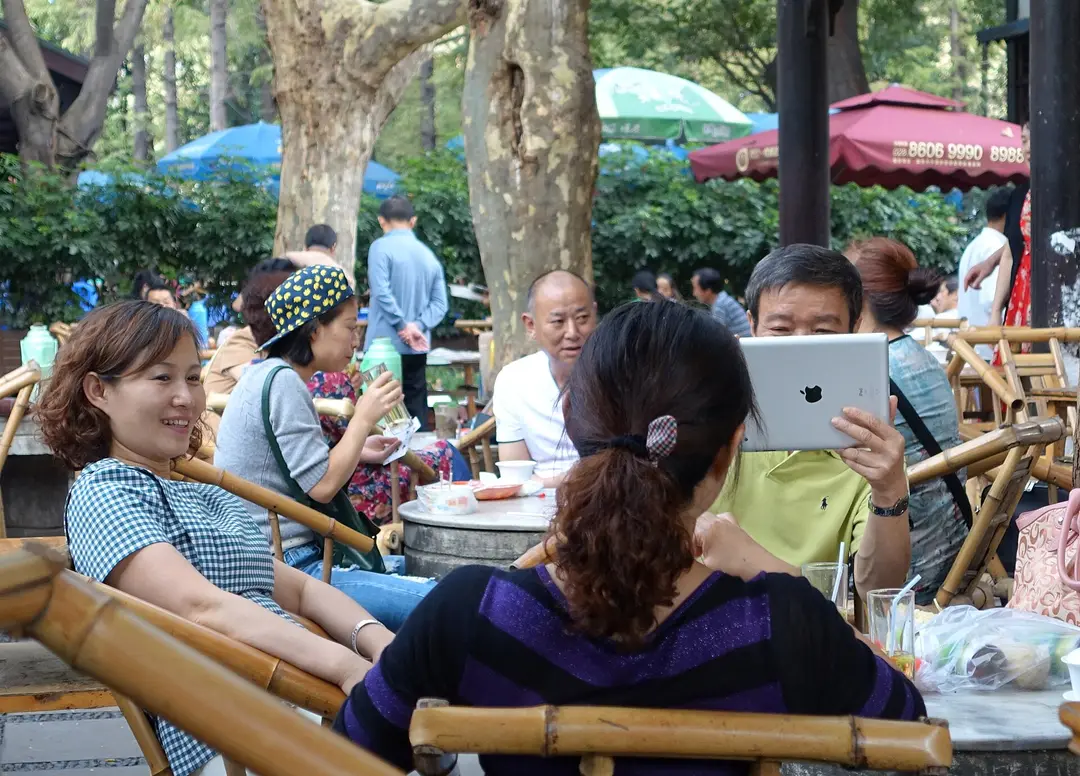
Come back into the center for a late lunch, then spend the afternoon at People’s Park. Find a bamboo chair in a teahouse, order a covered-bowl tea and stay as long as you like. If it is a weekend, walk past the matchmaking corner, where parents post notices about their unmarried children.
Day two: alleys and temple
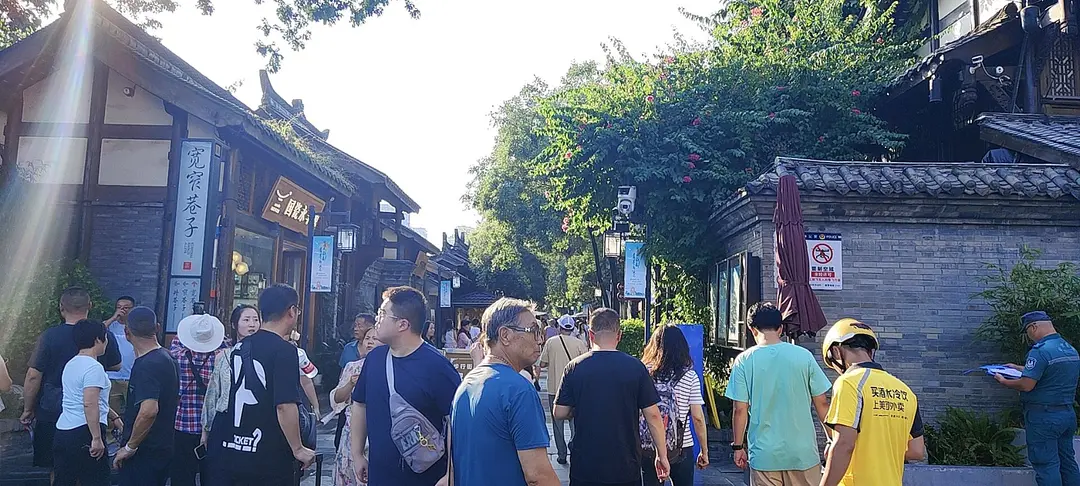
Spend the morning at Wenshu Monastery, a working Buddhist temple with free entry, quiet courtyards and a vegetarian restaurant. From there, take the metro or a short taxi ride to Kuanzhai Alley, three restored lanes of grey-brick courtyard houses.
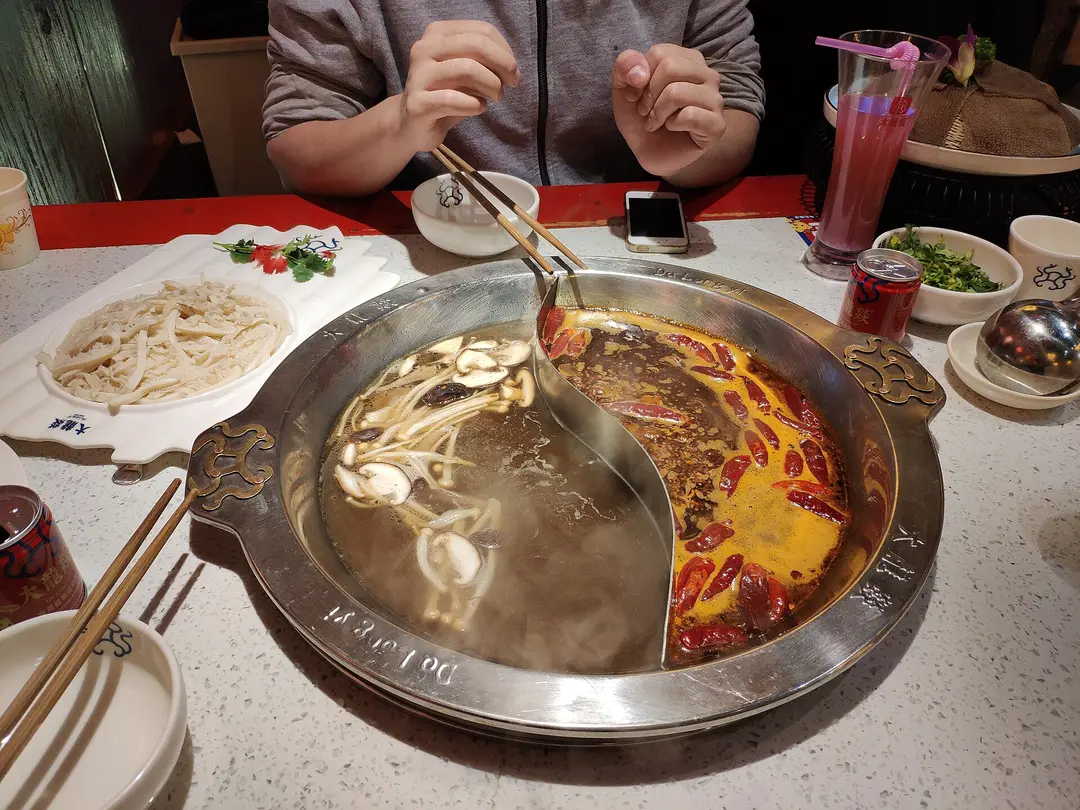
Kuanzhai Alley is at its best in the late afternoon and at dusk, when the lanterns come on. Stay for a short Sichuan opera show with face-changing at one of the courtyard teahouses, then go for hotpot.
Day three: your choice
Use the third day for what you liked most. Some visitors go back to the pandas. Others walk the Jinjiang River, visit Wuhou Shrine and the neighboring Jinli Street, or book a cooking class. Leave time for a long final meal; the Chengdu food guide covers hotpot, the main dishes and how to order with less spice.
Getting around
From the airports. Chengdu has two airports. Tianfu International (TFU) is about 50 km southeast of the center. Metro Line 18 runs to Chengdu South Railway Station; the express train takes about 35 minutes and costs about ¥10, and you change to Line 1 for the center. A taxi takes about 60–90 minutes and costs about ¥150–200 plus tolls. Shuangliu Airport (CTU) is about 16 km from the center and is linked by Metro Line 10.
By train. High-speed trains use several Chengdu stations; Chengdu East is on Metro Lines 2 and 7. Check the station named on your ticket. Our high-speed train guide explains booking with a passport.
Metro. Chengdu has 16 metro lines. Fares start at ¥2 and most trips in town cost ¥2–7. Most lines run from about 6 am to 11 pm. You can pay with an Alipay or WeChat transit QR code, and some gates accept foreign Visa or Mastercard cards. Useful stations: Tianfu Square (Lines 1 and 2), Chunxi Road (Lines 2 and 3), People’s Park (Line 2), Kuanzhai Alley (Line 4), Wenshu Monastery (Line 1) and Panda Avenue (Line 3).
Taxis and DiDi. Taxis are inexpensive; the Panda Base lists about ¥40 for a ride from Chunxi Road. DiDi, the ride-hailing app, is a useful backup; see the apps guide below.
Practical notes
Set up Alipay or WeChat Pay before you arrive. Teahouses, noodle shops and hotpot restaurants are mostly cashless, and many small places do not take foreign cards directly. See paying in China and apps and internet for the setup.
Book the Panda Base as soon as your dates are fixed. Tickets open 14 days ahead, the daily quota is limited, and popular dates sell out. Bring the passport you booked with; the Panda Base checks it at the gate.
Sichuan food is spicy and numbing, but you can ask for mild (微辣, wēi là) almost anywhere. A split hotpot with one plain broth is the usual answer for mixed groups.
If you want help putting the days together, the planning page is the place to start.
Checked on 29 October 2026.