Checked on 29 October 2026.
Most everyday payments in China are made by scanning a QR code with a phone. Since 2024 visitors have been able to do the same with their own cards, without a Chinese bank account. You will still meet places that want cash and hotels that take a credit card, so the safest setup uses all three.
The rules on fees and limits below come from published central bank and payment company guidance. They can change, and the current terms always appear in each app before you confirm a payment.
Set up before you fly
Do this at home, on hotel Wi-Fi or with a working data plan, a week or so before departure. Linking a card often triggers a fraud check from your bank, and that is much easier to sort out from home.
Alipay. Download Alipay from your usual app store, register with your own mobile number or email, then tap “Add now” (or Bank Cards) and enter a Visa, Mastercard, JCB, Diners Club or Discover card. To pay, open Pay/Receive to show your code, or tap Scan to scan the shop’s code. Alipay offers an English interface.
WeChat Pay (called Weixin Pay in China). Download WeChat, register with your foreign mobile number, then open the Wallet section of the app and add your card by entering its basic details. Verifying your passport in the app raises your limits, as with Alipay.
Set both up if you can. Many merchants accept both, and if one app declines a payment the other gives you a second route.
Fees and limits
Published guidance for both apps sets the same terms for foreign cards:
- Payments of ¥200 or less: no service fee
- Payments above ¥200: 3% of the full amount, so a ¥300 dinner costs ¥309
- Per payment: up to US$5,000
- Per year: up to US$50,000
The higher limits apply once you verify your identity by uploading your passport in the app. Alipay asks for this once your spending passes a lower threshold, so it does no harm to verify at the start. Your bank may also charge its usual foreign transaction fee, so a card without one saves a little more.
The fee works per payment, so it adds up mainly on larger bills. A ¥600 dinner paid by QR code costs ¥18 more. Where the till takes Visa or Mastercard directly, paying the card at the counter avoids the app fee, though your bank’s own charges still apply.
Cards at hotels and larger places
Foreign Visa and Mastercard cards are accepted at hotels of three stars and up, at major attractions, and at larger shops and restaurants that show the card logos at the till.
Taxis, small restaurants, market stalls and noodle shops usually do not take cards directly. Pay these with Alipay, WeChat Pay or cash.
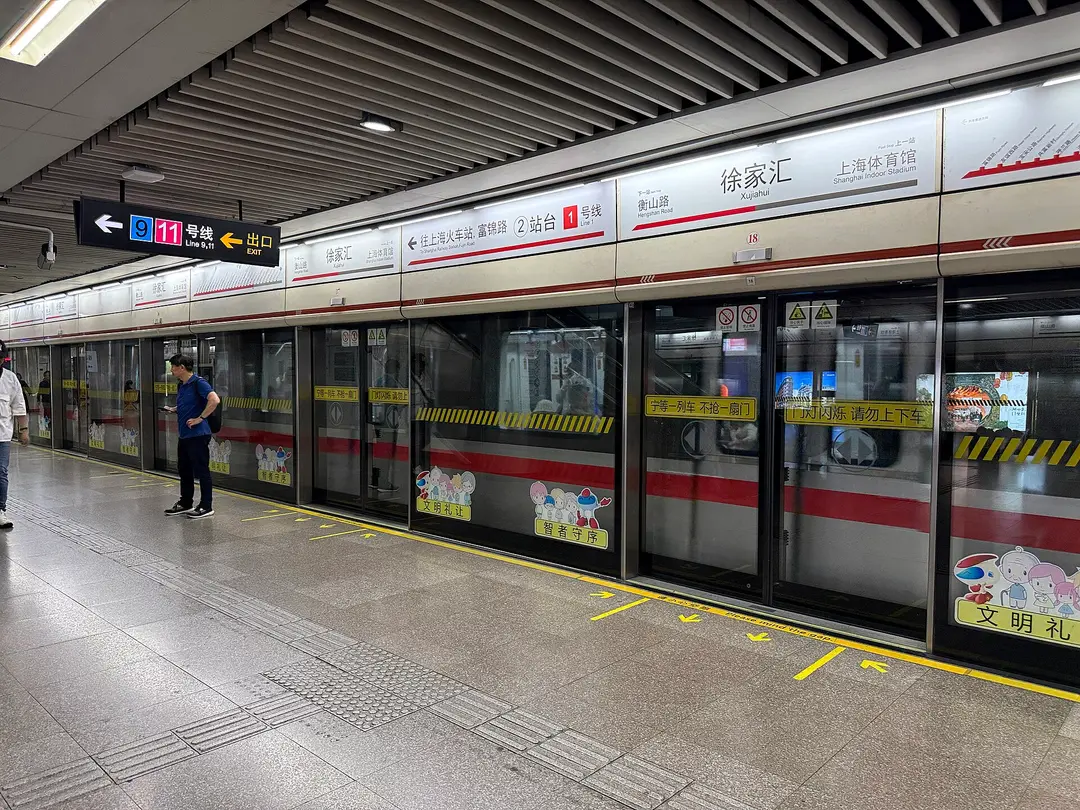
On public transport you can often tap your card. Every Beijing subway station has accepted foreign Visa and Mastercard cards since September 2024, and the Shanghai Metro has taken Visa, Mastercard, American Express, JCB and UnionPay cards at the gates since June 28, 2025. Contactless cards and phone wallets both work.
Cash
The renminbi (CNY, written ¥) is legal tender, and the central bank treats refusing cash as unlawful. Hotels, attractions, taxis and most shops will take it. Some small vendors almost never see cash, though, and may struggle to make change for a ¥100 note.
Bring a modest amount in smaller notes as a backup for when a phone battery dies or an app declines. You can withdraw yuan at bank ATMs that display your card’s network logo, or exchange money at banks and exchange counters showing a currency exchange sign.
Tax refunds on shopping
Visitors can reclaim part of the VAT on goods bought at shops displaying the departure tax refund sign. The main conditions:
- Spend at least ¥200 in the same shop on the same day
- Leave China within 90 days of the purchase, and within 183 days of your last entry
- Take the goods out unused
Ask the shop for the tax refund form and invoice and show your passport. At the airport, show the goods, form and invoices to customs before check-in, then collect the refund at the counter after passport control. The refund is 11% or 8% of the invoice amount, depending on the goods, minus a 2% handling fee, so you get back up to about 9%. Refunds up to ¥20,000 can be paid in cash; larger ones go by bank transfer.
Some shopping areas in large cities, including Beijing and Shanghai, now offer instant refunds in the shop. The customs check at departure still applies.
When a payment fails
Declines usually come from the card issuer, not from China. If a QR payment fails, check the app for a message from your bank, approve the charge in your banking app if asked, and try again. If it still fails, try the other app or another card, then cash.
Keep your phone charged. Long days of maps, translation and payments drain a battery quickly, and with no phone you are down to cards and cash. A small power bank helps; airlines limit their size and how you carry them, so check your carrier’s rules.
Refunds go back the way you paid. If a shop refunds a QR payment, the money returns to your linked card, and the timing depends on your bank.
A simple plan
Link one card to each app and verify your passport before you go. Carry a credit card for hotels and larger bills, and some cash in small notes. Our apps and internet guide covers getting data on your phone, which these apps need to work.