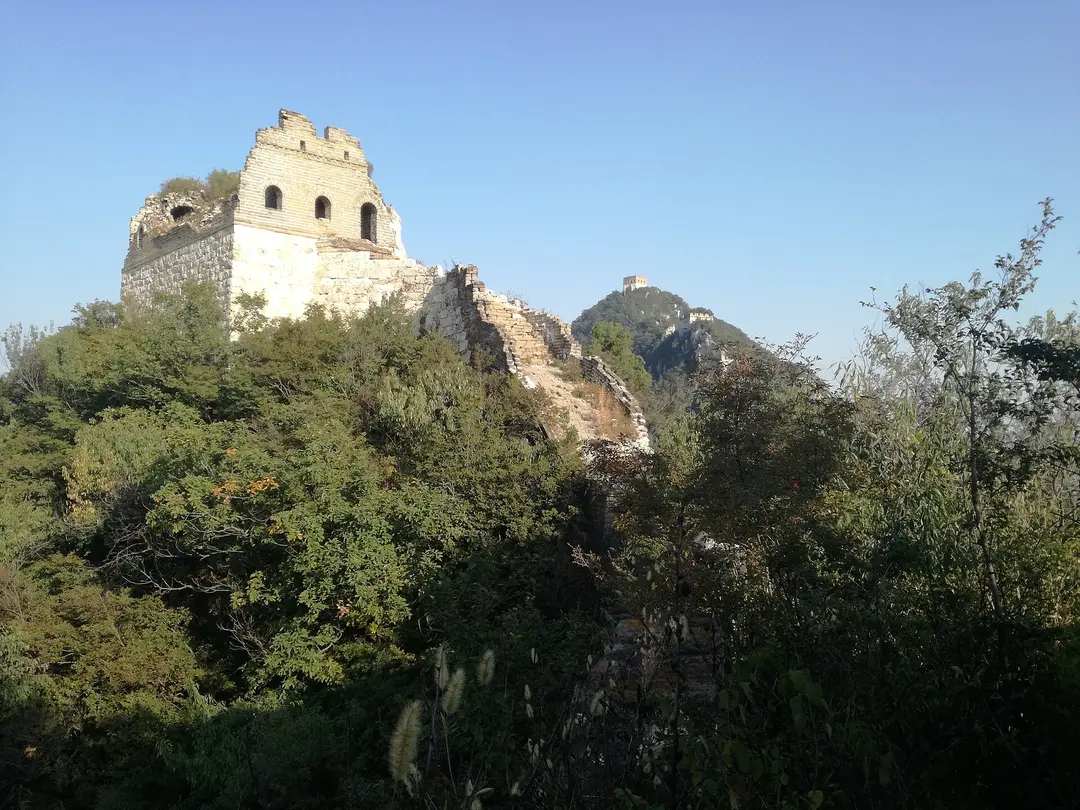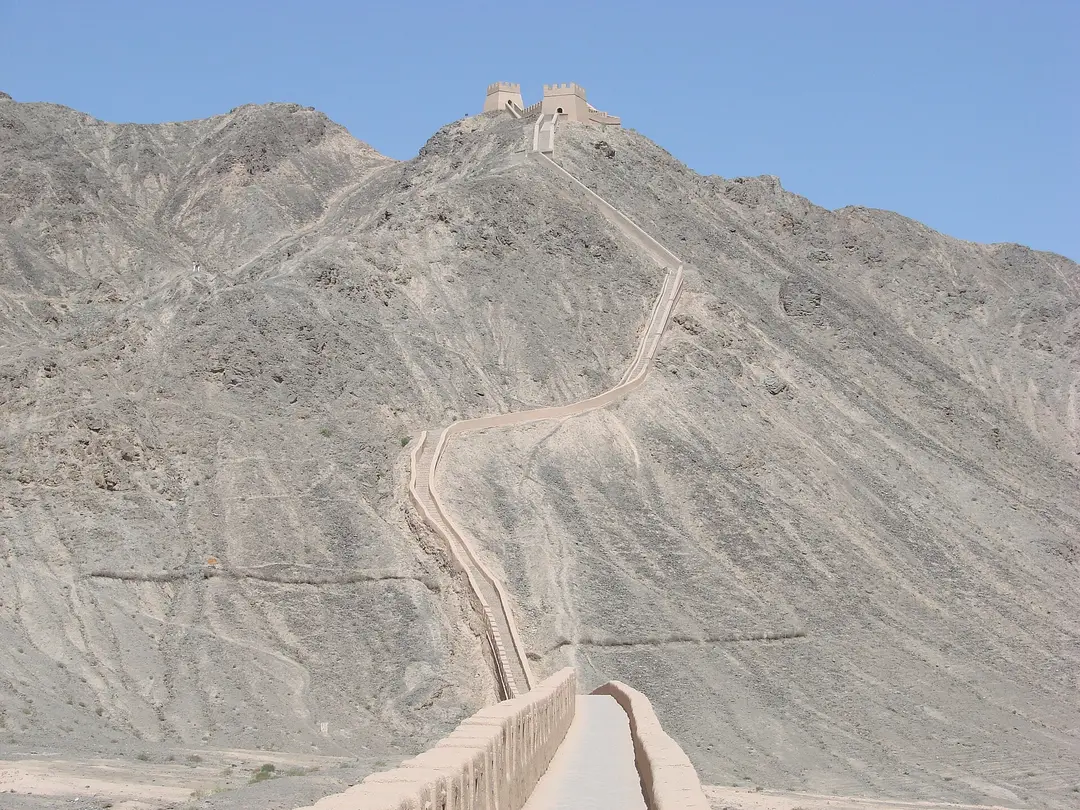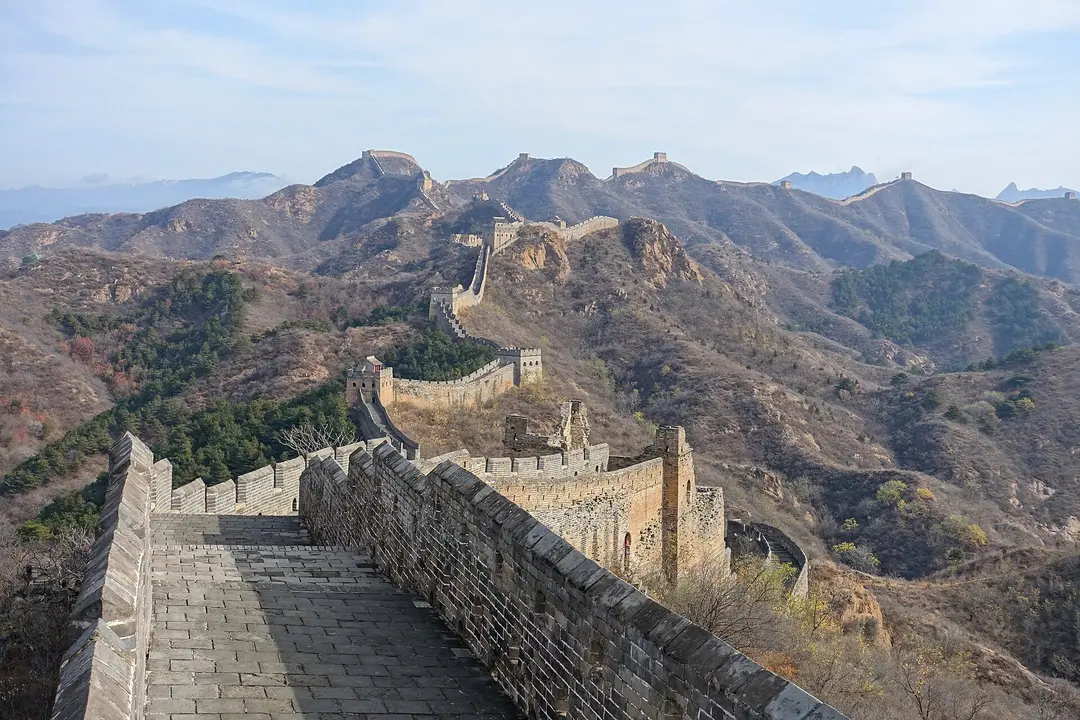
The Great Wall of China is 21,196.18 km long if you count every wall, trench and fort built by every dynasty, according to a survey China’s State Administration of Cultural Heritage released in 2012. It was built and rebuilt over roughly 2,000 years, from around the 7th century BC to the 17th century AD, and the brick wall most visitors see is Ming work, mostly 400 to 550 years old.
The figures below come from China’s official surveys, UNESCO and Britannica. Where sources disagree, we say so.
How long is the Great Wall of China?
There are three numbers in common use, and each measures something different.
| Figure | What it counts | Source |
|---|---|---|
| 21,196.18 km (13,171 miles) | Walls, trenches and related sites of all dynasties, in 15 provinces and regions | State Administration of Cultural Heritage, 2012 |
| 8,851.8 km (5,500 miles) | The Ming wall only: 6,259.6 km of built wall, 359.7 km of trenches and 2,232.5 km of natural barriers | State Administration of Cultural Heritage, 2009 |
| About 5,000–6,000 km | Older estimates of the main Ming line, without branches | Commonly quoted before 2009 |
The 2012 survey took five years and recorded 43,721 separate heritage sites, from wall stretches to passes and beacon towers. That is why its total is more than double the Ming figure: it adds earlier walls built by the Qin, Han and other dynasties, many of which run on different lines, far apart, and centuries older.
So the wall is not continuous. It is a set of overlapping frontier lines. Some stretches are restored brick, some are earth mounds, and some are hills and rivers that the builders used as part of the defense. When Live Science reported the 2012 results, it noted that only 8.2% of the Ming wall is intact.
For scale: 21,196 km is about 53% of Earth’s equator, which is roughly 40,075 km around. About 520 km of wall runs through Beijing’s outer districts, including the restored section at Mutianyu. Our Great Wall map shows where the main lines start and end.
When was the Great Wall built, and how long did it take?
Building went on, with long gaps, for more than 2,000 years. UNESCO describes the wall as continuously built from the 3rd century BC to the 17th century AD, and the earliest state walls are older still.
| Period | Dates | What was built |
|---|---|---|
| Spring and Autumn and Warring States | c. 7th century–221 BC | Rival states wall their own borders. The Qi wall in Shandong is the oldest surviving section; excavations reported in 2025 date parts to the late Western Zhou or Spring and Autumn period. |
| Qin | 221–206 BC | After unifying China, the First Emperor sends General Meng Tian north to join and extend the northern walls, “from Lintao to Liaodong.” |
| Han | 206 BC–AD 220 | The Hexi wall, begun in 121 BC, runs west from Yongdeng in Gansu toward Lop Nur in Xinjiang, guarding the Silk Road. |
| Northern Wei | 386–534 | More than 1,000 km built against northern peoples, including the Rouran. |
| Northern Qi | 550–577 | About 1,500 km repaired or added; 1.8 million workers recruited. |
| Sui | 581–618 | The wall repaired seven times against the Turks. |
| Jin (Jurchen) | 1115–1234 | Long lines of earth walls and trenches across the northern steppe. |
| Ming | 1368–1644 | The wall rebuilt in brick and stone. Most of what stands today dates from the Hongzhi reign (1487–1505) onward; General Qi Jiguang added watchtowers between 1567 and 1570. |
Individual campaigns could be fast. The Qin effort took about a decade at most: China was unified in 221 BC and Meng Tian died in 210 BC. The Ming rebuilding, by contrast, ran for most of the dynasty’s 276 years.
The answer to “how old is the Great Wall” therefore depends on the section. The Qi wall is about 2,700 years old. The brick wall at Mutianyu or Jinshanling is Ming.
Who built the Great Wall?
Soldiers, conscripted peasants and convicts did most of the work, under orders from the state. The Han-era historian Sima Qian records that Meng Tian led 300,000 men north to drive out the nomads and build the wall. Britannica notes that the Northern Qi recruited 1.8 million workers for their sections.
In the Ming period the wall was built and garrisoned largely by the army, and frontier commanders such as Qi Jiguang directed work on their own stretches.
Why was the Great Wall built?
Its main purpose was defense against horse-riding peoples from the northern steppe: the Xiongnu in the Qin and Han periods, the Rouran and the Turks later, and the Mongols in the Ming period. UNESCO sums it up as a defense project of successive Chinese empires, built “to protect China from outside aggression.”
A wall did not have to stop an army to be useful. It slowed raiders on horseback, gave warning through beacon towers, and channeled traffic through fortified passes, where trade and travel could be controlled. In the far west, the Han wall also protected the trade route through the Hexi Corridor toward Dunhuang.
It matters today for a different reason. UNESCO lists it as a World Heritage Site as “the great military defence project” of successive Chinese empires and a record of more than 2,000 years of frontier history, which is the usual answer to “why is the Great Wall important.”
Was the Great Wall effective?
Against raids, often. Against determined invasions, not reliably. History.com puts it bluntly: the wall “never effectively prevented invaders from entering China.”
Two examples show the limits. The Mongols broke through the Jin dynasty’s northern defenses in 1213 and took the Jin capital, Zhongdu (now Beijing), in 1215. In 1644 the Manchus entered China through Shanhai Pass, close to where the Ming wall meets the Bohai Sea, after the Ming general Wu Sangui opened the gate and joined them against the rebels who had taken Beijing.
Once the Qing dynasty ruled on both sides of the wall, it had little military use. Britannica notes that it was then repaired less often and gradually fell into ruin.
How tall and wide is the Great Wall?
The Ming wall averages 7 to 8 m (23 to 26 ft) high, and less on steep slopes, according to Britannica. It is typically about 6.5 m wide at the base and 5.8 m wide at the top, enough for several people to walk side by side. Watchtowers stand higher than the wall.
Earlier walls vary much more. Many survive only as earth ridges a few meters high, and some sections are trenches rather than walls.
There is no official count of steps. Flat desert and plain sections have none, while restored mountain sections near Beijing are largely steep, uneven stairs. If you plan to walk a long stretch, see can you walk the Great Wall.
What is the Great Wall made of?
Builders used whatever the landscape offered. Britannica lists tamped earth packed between wooden boards, adobe bricks and mixtures of brick and stone.
- Rammed earth. Most early walls, from the Qin onward, were layers of earth pounded flat inside wooden frames.
- Earth with reeds and branches. In the Gansu desert near Dunhuang, Han builders strengthened the earth with layers of tamarisk twigs or bundles of reeds. In Mongolia’s Gobi, one section was built from wet mud and a desert shrub called saxaul.
- Stone. In the mountains, builders used local rock.
- Brick and stone. The Ming wall near Beijing is faced with fired brick and cut stone set in mortar, which is why it has lasted best.
You may read that the wall is held together by sticky rice. Researchers at Zhejiang University showed in 2010 that lime mortar mixed with sticky rice was widely used in Chinese building, including a 600-year-old city wall in Nanjing and a Ming tomb. Their studies did not focus on the Great Wall itself.
How many people died building the Great Wall?
Nobody knows. No reliable death count exists for any period of construction. Surviving records give numbers of workers sent, such as Meng Tian’s 300,000, but no trustworthy totals of the dead.
Figures such as “400,000 deaths” appear in popular sources, including Smithsonian and History.com, but they are estimates, not counts. The claim that workers were buried inside the wall is also widely repeated without a tally behind it.
What the sources do agree on is that the work was brutal. Hundreds of thousands of people were conscripted, often far from home, and the suffering entered folklore. In the best-known legend, Meng Jiangnu’s husband is taken to build the wall and dies; her weeping brings part of the wall down. China Daily notes that the story is folk tradition, not history.
Is the Great Wall a wonder of the world?
It is not one of the original Seven Wonders of the Ancient World. It is on two modern lists:
- UNESCO World Heritage List, since 1987.
- New Seven Wonders of the World, chosen by public vote and announced in Lisbon on July 7, 2007, alongside sites such as Petra and Machu Picchu. UNESCO said it had no part in that campaign.
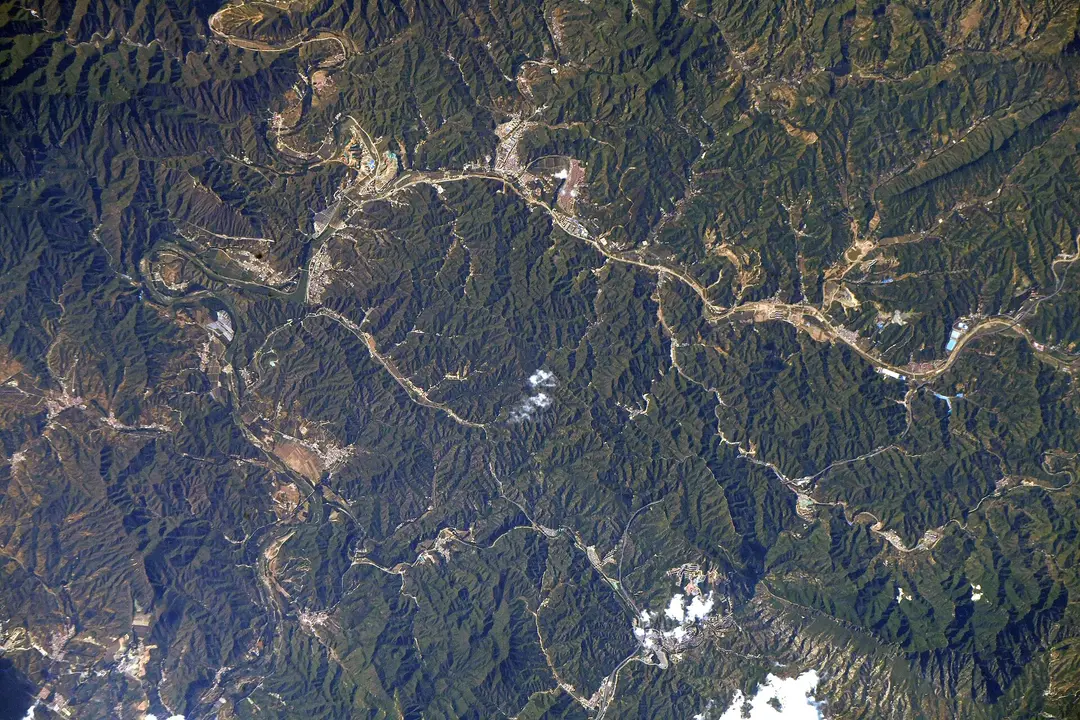
One famous “fact” does not hold up: you cannot see the wall from the Moon, and it is very hard to spot even from low orbit. We explain why in can you see the Great Wall from space.
The easiest way to see the Ming wall for yourself is a day trip from Beijing. If you would like a local host to arrange the car and a guide for a quieter section, see our private guide service.