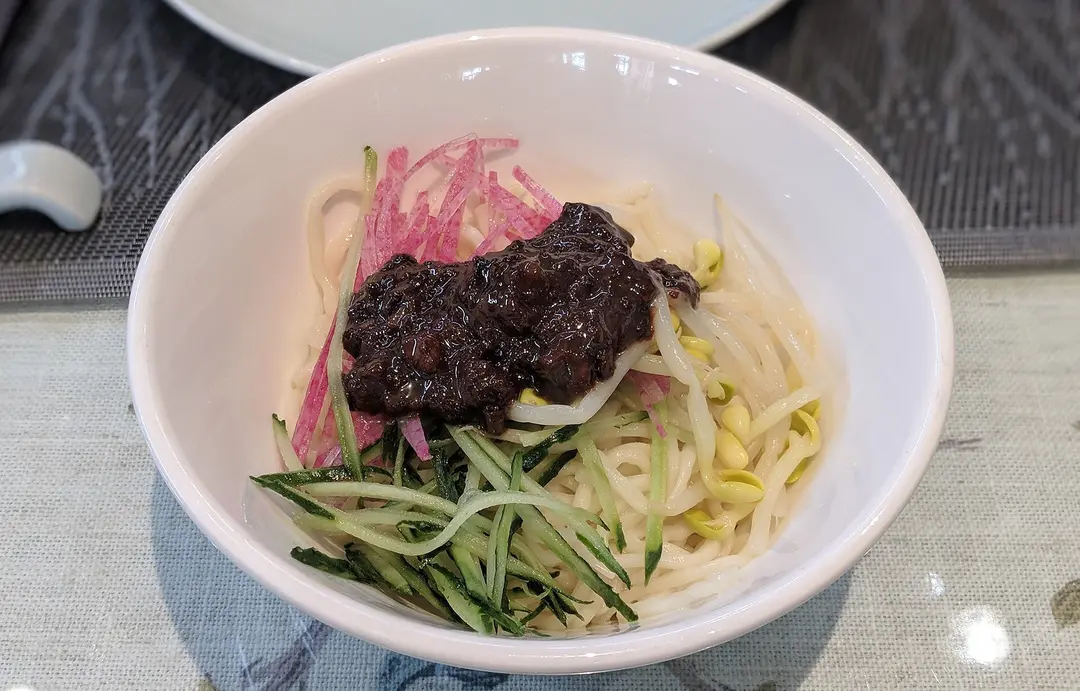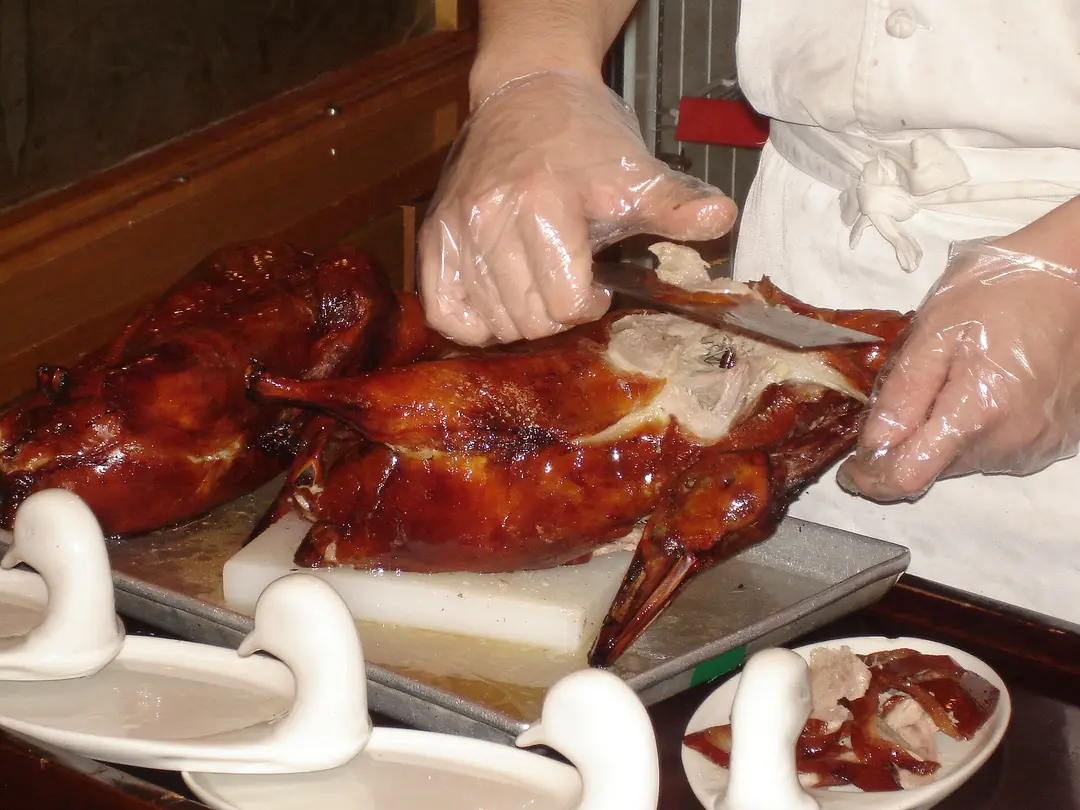
Beijing food comes from the north: wheat rather than rice, plenty of lamb, salty sauces and long-cooked dishes built for cold winters. It is rarely spicy unless you go looking for food from other regions, which the city also has in quantity.
The famous dish is Peking duck, and it deserves a dinner of its own. The rest of the local repertoire is simpler and cheaper: bowls of noodles, hot pot, offal stews and breakfast snacks that you will find in small, plain restaurants rather than grand ones.
Where to eat
The hutongs around Shichahai and Nanluoguxiang have noodle houses, snack shops and cafes. Nanluoguxiang itself is crowded with snack stalls; the side lanes and the streets around the Drum Tower have more ordinary local places. See our guide to the Hutongs of Beijing.
Qianmen and the lanes around it are a traditional area for old Beijing snacks such as luzhu, and are easy to combine with a morning at the Temple of Heaven.
Gui Jie (Ghost Street) on Dongzhimen Inner Street is a long strip of restaurants open from midday until the early hours. It is best known for spicy crayfish and grilled fish, and the city’s tourism site puts a typical bill at ¥150 to ¥350 for two.
Shopping malls in Wangfujing, Sanlitun and the CBD have food courts and branches of well-known chains. They are a low-stress option with picture menus and clean restrooms.
How ordering works
Many restaurants have you order by scanning a QR code on the table, which opens a menu in WeChat or Alipay. Some offer English, and most have photos. If you prefer, ask for a paper menu; many places still have one.
Dishes are meant to be shared. For two people, a duck (half or whole) plus two vegetable dishes is plenty. Hot pot is ordered item by item: a broth, then plates of meat and vegetables, plus dipping sauce.
Tipping is not expected in ordinary restaurants.
Spice and dietary needs
Beijing dishes are mostly salty and savory rather than hot. Sichuan and Hunan restaurants are everywhere, though, so check before ordering if you avoid chili. The phrase 不要辣 (bù yào là) means “not spicy.”
Vegetarians will find vegetable, tofu and egg dishes on most menus, but meat stock and lard are common, and few staff will know what is in a sauce. Buddhist vegetarian restaurants are the safest choice. For allergies, carry a written card in Chinese; peanuts, sesame and wheat are used widely in northern cooking.
Paying
Most restaurants expect payment by Alipay or WeChat Pay. Both apps let you link a foreign Visa or Mastercard. Larger restaurants and hotels often take international cards; small shops and stalls usually do not. Carry some cash as backup. Our paying in China guide explains the setup. The Beijing subway also takes Visa, Mastercard, JCB and American Express contactless cards at the gates, which is handy for getting to dinner.
For more on planning your days around these neighborhoods, see the Beijing city guide.
Checked on 29 October 2026.