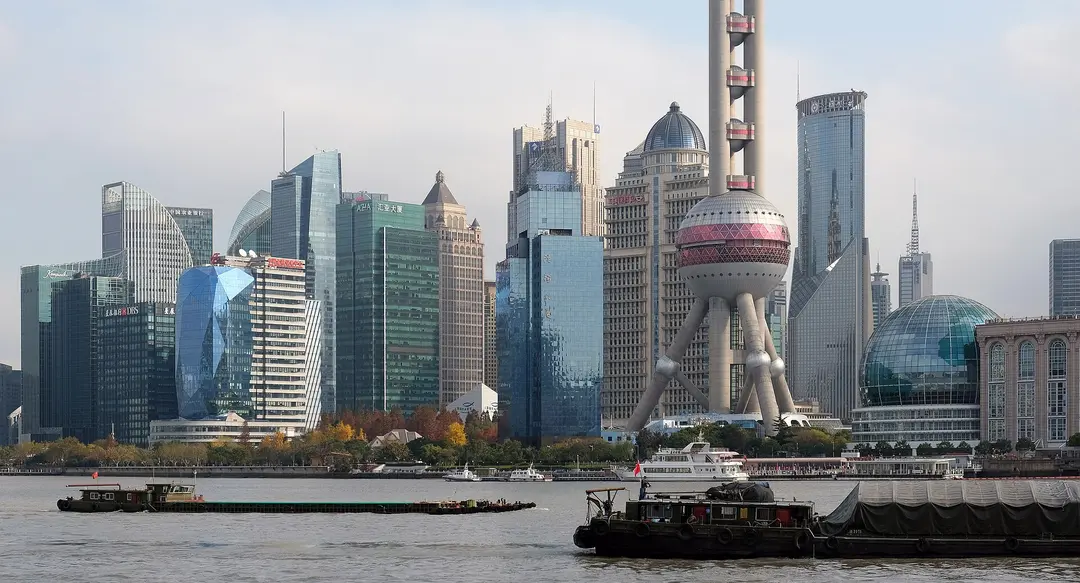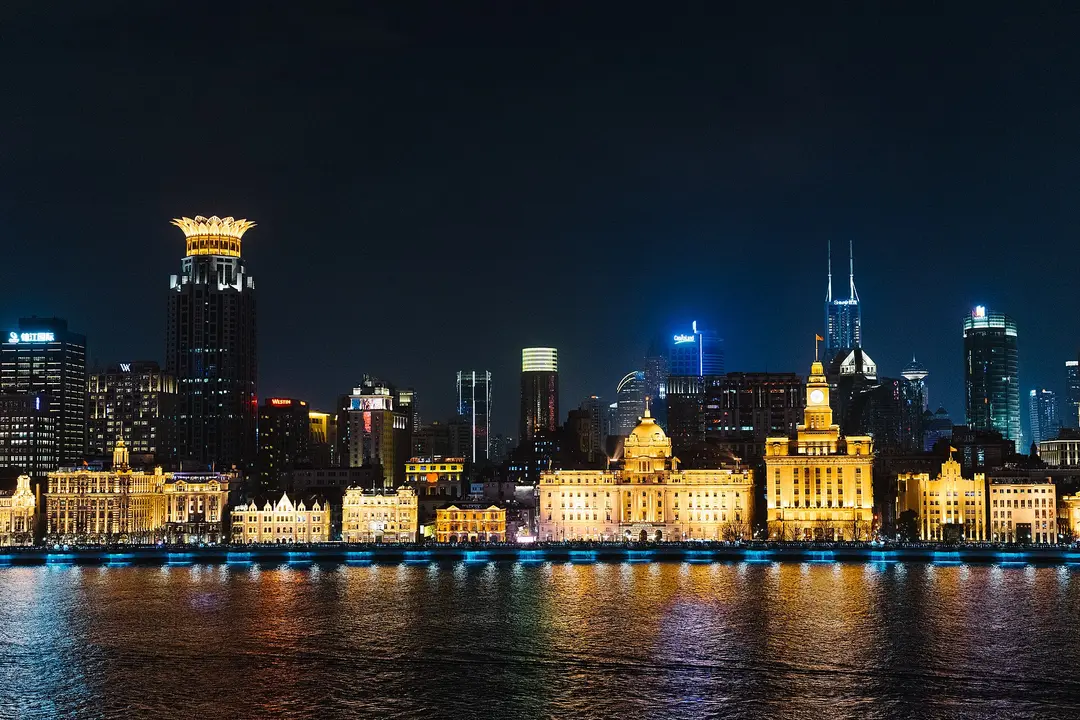
The Bund is the riverfront of old Shanghai. For about a mile along the west bank of the Huangpu River, Zhongshan East 1st Road is lined with 52 buildings put up as banks, trading houses, hotels and clubs, mostly in the early 20th century. Their styles run from Neo-Classical and Beaux-Arts to Art Deco. Across the water stand the towers of Lujiazui, including the Oriental Pearl Tower and Shanghai Tower.
The pleasure of the place is the contrast between the two banks. It is an open-air walk, free and without a gate, and it is part of almost every first visit to the city. Read it alongside our Shanghai city guide to fit it into a short stay.
What you see
A flood wall built in the 1990s raised the riverbank well above street level. On top of it runs a wide paved promenade, separated from the traffic, which now runs partly in a tunnel below. From the promenade you look east across the river to Pudong, and turn around to see the old facades.
At the north end, the steel Waibaidu Bridge crosses Suzhou Creek where it meets the Huangpu. Huangpu Park sits beside it on the riverbank. At the south end the walk continues toward the Shiliupu ferry and cruise piers.
A sensible route
Take Metro Line 2 or 10 to East Nanjing Road. Walk east along the pedestrian stretch of Nanjing East Road for about 10–15 minutes until you reach the river. Climb the steps to the promenade.
Turn left and walk north, with the river on your right. The light is usually best on the old buildings in late afternoon, and the Pudong towers start to light up as the sky darkens. Continue to Waibaidu Bridge for the view back down the river, then return along the promenade or along the building side of the road, where you can see the entrances and stonework up close.
The whole loop takes about one to two hours at an easy pace, longer if you stop for photographs or a drink with a view. To see the Bund from the other side, take Line 2 one stop east to Lujiazui station and walk to the riverside there.
When to go
Most people come at dusk, and they are right to. Arrive about 45–60 minutes before sunset, walk while it is still light, and stay through the blue hour as both banks light up. On the city’s winter lighting schedule, the landscape lights along the river switch off at 22:00. On national holidays the city has kept them on until 23:00.
Light shows with lasers or synchronized facades happen only on announced dates. During the October 2026 holiday week, for example, the city ran its holiday lighting mode without a cross-river light show. If a show matters to you, check the Shanghai government’s English news site or ask your hotel during the week you visit.
For a quieter walk, go early on a weekday morning. The promenade is far emptier, and you can photograph the facades without crowds.
Practical tips
- Avoid national holiday evenings if you can. Crowd control can turn the promenade into a one-way route and close direct crossings and some metro exits, so a 10-minute walk can take much longer.
- Keep your phone and bag in front of you in dense crowds after dark.
- The public ferry is transport, not a tour, and costs ¥2. Sightseeing cruises are separate, sold at the piers near Shiliupu, with times and prices that change by season.
- The Bund is exposed. Bring a light layer in autumn evenings and an umbrella in summer.
- Pay with a contactless card at the metro gate; see our paying in China guide for the rest of your spending.
Checked on 29 October 2026. Opening times and ticket rules change; confirm on the official site before you go.