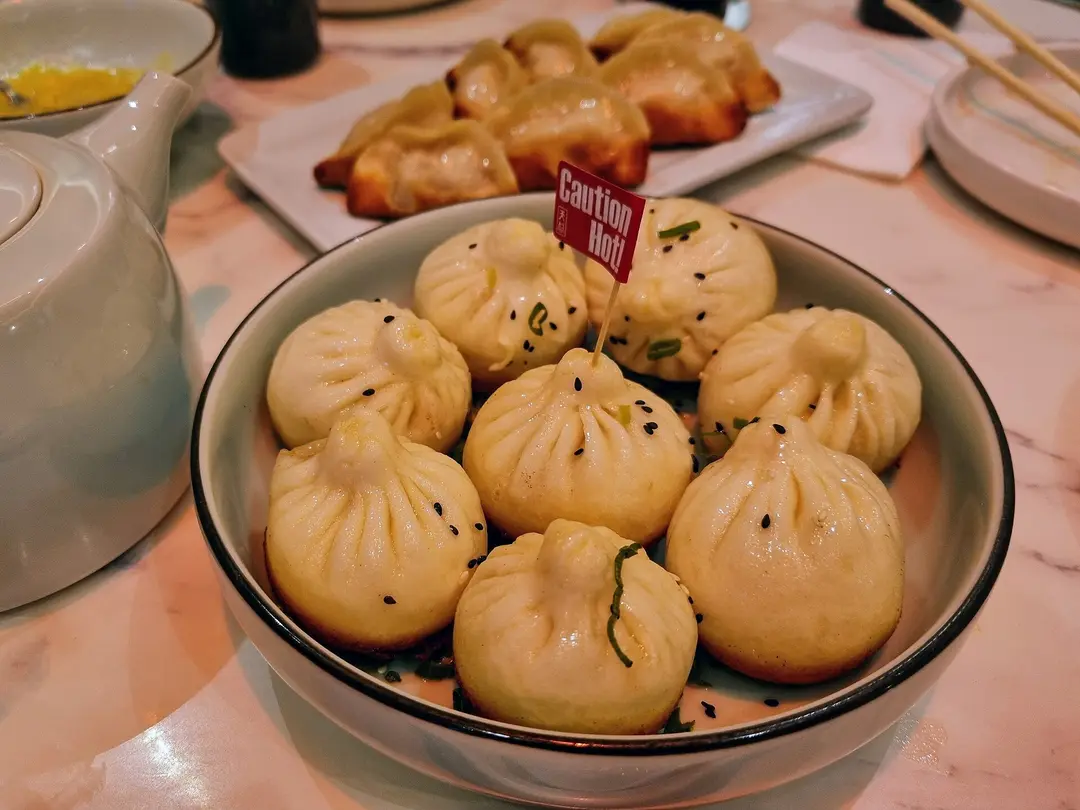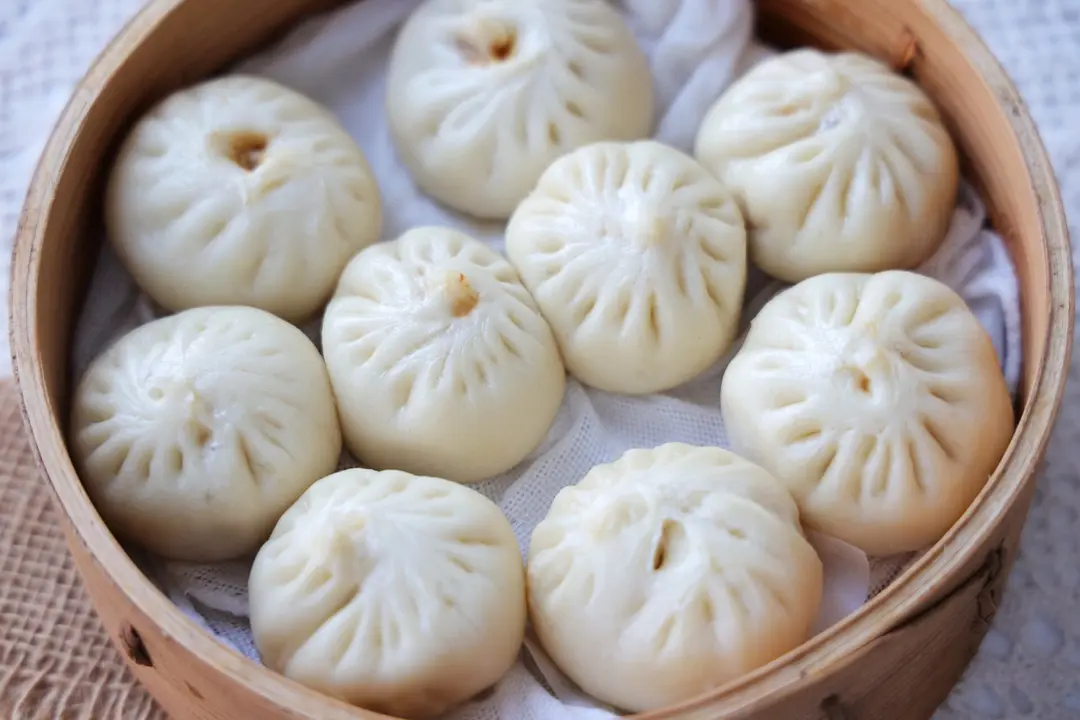
Shanghai’s own cooking is called benbang cai, “local cooking.” It leans sweet and savory rather than hot, built on soy sauce, rock sugar and Shaoxing rice wine. Braises are dark and glossy, cold starters come before the hot dishes, and dumplings and noodles fill the gaps between meals.
The city also eats every other Chinese cuisine. If you want chili, Sichuan and Hunan restaurants are easy to find. This page covers what is specific to Shanghai. For where it fits in a trip, see our Shanghai city guide.
Where to eat
Breakfast is the easiest meal to eat like a local. Small shops open early and sell pan-fried buns, wontons, scallion pancakes and soy milk with fried dough sticks. Point at what other people are eating.
For a sit-down Shanghainese meal, look for restaurants that describe themselves as benbang (本帮菜) or “Shanghai cuisine.” You will pass several on a day around Yu Garden or in the Former French Concession. Ask your hotel to recommend one nearby and to write down the name and address in Chinese for the taxi.
How ordering works
Many restaurants now ask you to scan a QR code on the table to see the menu and order. Scan it with Alipay or the scanner inside WeChat, not your phone’s camera, because the menu usually runs inside one of those apps. Some menus are only in Chinese, and a few ask for a Chinese phone number.
If it does not work, ask for a paper menu: say “càidān” (菜单) and show the QR code with a shrug. Staff will often take your order on their own device. A translation app that reads photos helps with the dish names. Use the pictures and check the basics: meat or fish, rice or noodles, spicy or not.
Dishes come to the middle of the table to share. Order one dish per person plus one more, with rice or noodles, and add more if you are still hungry.
Spice and dietary needs
Shanghainese food is mild, though some noodle dishes come with chili oil. If you want no chili at all, say “bú yào là” (不要辣).
Vegetarians will find stir-fried greens, braised gluten (kaofu) and tofu dishes, but stocks and lard are common. Say “wǒ chī sù” (我吃素, I am vegetarian) and check again for each dish. For allergies, show the words on your phone in Chinese, for example 我对花生过敏 for a peanut allergy.
Hairy crab season
Hairy crab is an autumn food. At Yangcheng Lake near Suzhou, the best-known source, the catch usually opens in late September, and many restaurants run crab menus from September to December. Prices vary with size and source, so ask for the price per crab before it is cooked.
Paying for meals
Most restaurants and almost all small shops expect mobile payment. Link a foreign card to Alipay or WeChat Pay before you travel; our paying in China guide explains how. Hotels and some larger restaurants take international cards, but do not count on it at a noodle counter.
Checked on 29 October 2026.